 Homes Trak™
How Often To Change Your HVAC Filter When You Have Pets
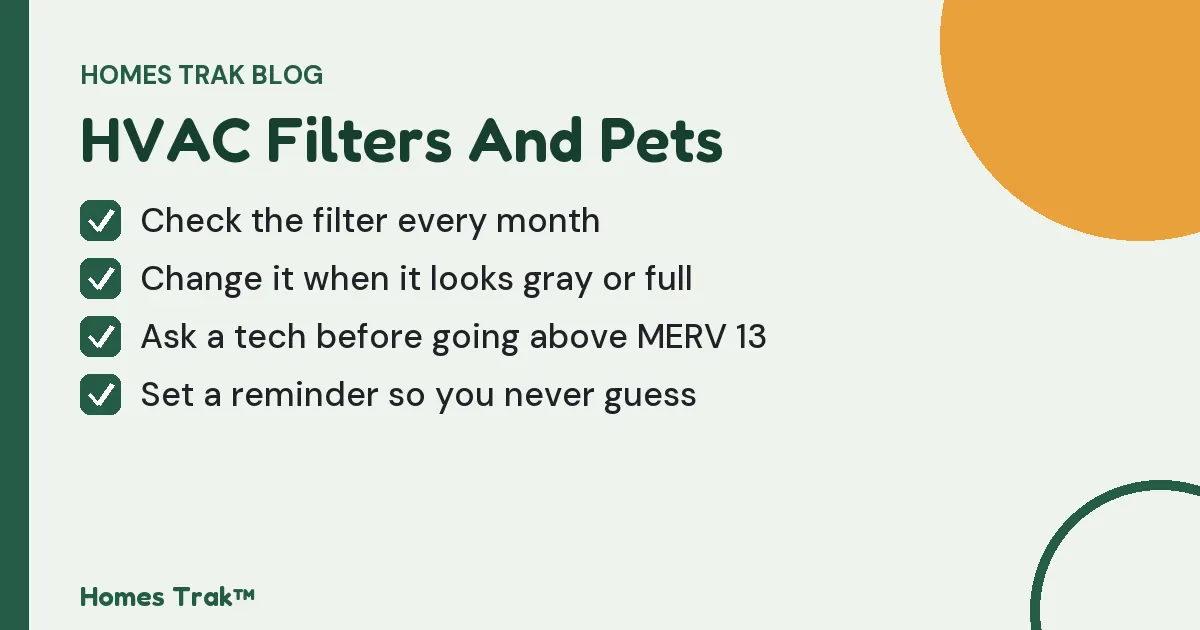
If you share your home with a dog or cat, your heating and cooling filter works harder than the label on the box assumes. Hair, dander and the dust that comes in on paws all end up in the return air. A filter rated for three months can look gray and matted well before then.
There is no single number that fits every house. The answer depends on how many pets you have, how much they shed, the type of filter, and how often the system runs. What every source agrees on is that you should look at the filter often and change it when it is dirty. This post explains the official guidance, how pets change it, and a simple routine that keeps you on track.
What the official guidance says
ENERGY STAR's maintenance checklist tells homeowners to inspect, clean or change the air filter in a central air conditioner, furnace or heat pump once a month. It warns that a dirty filter can raise energy costs and damage the equipment, leading to early failure.
The U.S. Environmental Protection Agency adds that manufacturers typically recommend replacing filters every 60 to 90 days, and that you should change them more often if they are heavily soiled. The EPA also notes that a clogged filter cuts airflow, which can make the system run longer and use more energy.
So the baseline is clear. Look at the filter monthly, and replace it within the 60 to 90 days manufacturers suggest, or sooner when it looks dirty. Pets push you toward more frequent changes.
How pets change the schedule
Pet hair is large enough that a basic filter catches a lot of it, which is exactly why the filter fills up fast. Dander is smaller and lighter. The EPA points out that pet dander tends to settle quickly onto floors and furniture, so the filter is only part of the fix. Regular vacuuming and dusting remove much of what the filter never sees.
A few things make a filter clog faster in a pet home:
- More than one pet, or a breed that sheds heavily
- Seasonal shedding in spring and fall
- Pets that sleep near a return vent
- Long run times during very hot or very cold weeks
- Thin one-inch filters, which have less surface area than deeper media filters
Instead of picking a number from the internet, use your own filter as the guide. Pull it out once a month and hold it up to a light. If you cannot see light through it, or it is coated in a gray layer of fur and dust, change it. After two or three months of checking, you will know your home's real interval.
Choosing the right filter
Filters are rated by MERV, which stands for Minimum Efficiency Reporting Value. A higher number catches smaller particles. The EPA suggests using a filter rated MERV 13 or higher if your system can handle it.
That last part matters. A denser filter can restrict airflow in some systems, especially older ones or those designed for thin filters. The EPA recommends checking with an HVAC professional about the highest rating your system can accept. If you upgrade, check the new filter more often at first, because it will fill faster.
A few practical tips:
- Write the exact filter size on the return grille or the furnace cabinet. The size is printed on the edge of the old filter.
- Buy several at once, so a replacement is always on the shelf.
- Note the airflow arrow on the frame and point it toward the furnace or air handler.
- If you have a deeper media filter, follow its own interval and still check it monthly.
Other steps that help in a pet home
The filter is one tool. These habits keep the air cleaner and the filter lasting longer:
- Vacuum often with a vacuum that has a good filter, and empty it outside if you can.
- Brush pets regularly, ideally outdoors.
- Wash pet bedding on a schedule.
- Keep return vents clear of fur buildup by wiping or vacuuming the grille.
- Book the yearly system check. ENERGY STAR recommends a pre-season check-up each year, with cooling in the spring and heating in the fall.
If your system is getting older, the age changes the math on repairs. See how to find the age of your HVAC unit to read the date from the nameplate.
How to remember to check
The monthly check only works if you remember it. Most people change the filter when they notice dust on the vents or a jump in the energy bill, which is usually weeks late.
A few ways to keep it going:
- Tie the check to a date you already remember, such as the first of the month.
- Keep a short log of the date and the filter you used, so you can see your real interval.
- Store the filter size with the log, so buying the right one takes seconds.
Homes Trak, an app for iPhone and iPad, keeps this kind of task on a maintenance calendar that builds itself from your home and sends a phone alert when it is due. You can mark it done in a tap, and the history shows how often you actually changed it. The features page shows how reminders work. If you want a full system for every task in the house, our guide to the best way to keep track of home maintenance walks through it.
Frequently asked questions
Do I need a special filter for pets?
Not always. Some filters are marketed for pets, but the rating that matters is MERV. A higher MERV catches smaller particles like dander. The EPA suggests MERV 13 or higher if your system can handle it, so ask an HVAC technician what your system supports before you buy.
What happens if I wait too long to change the filter?
A clogged filter reduces airflow. The EPA says this can make the system run longer and use more energy. Less airflow can also make rooms less comfortable and put extra strain on the equipment over time.
Is the furnace filter enough to control pet allergies?
The EPA notes that a furnace filter mainly protects the equipment and that pet dander settles quickly, so much of it never reaches the filter. Regular vacuuming, dusting and washing bedding help a lot. For allergy concerns, talk with a doctor about what is right for your household.
How do I know what size filter to buy?
The size is printed on the cardboard frame of the filter you have now, usually as three numbers for width, height and depth. Write it down on the return grille or in your home records so you have it the next time you shop.