 Homes Trak™
How Much to Budget for Home Maintenance Each Year
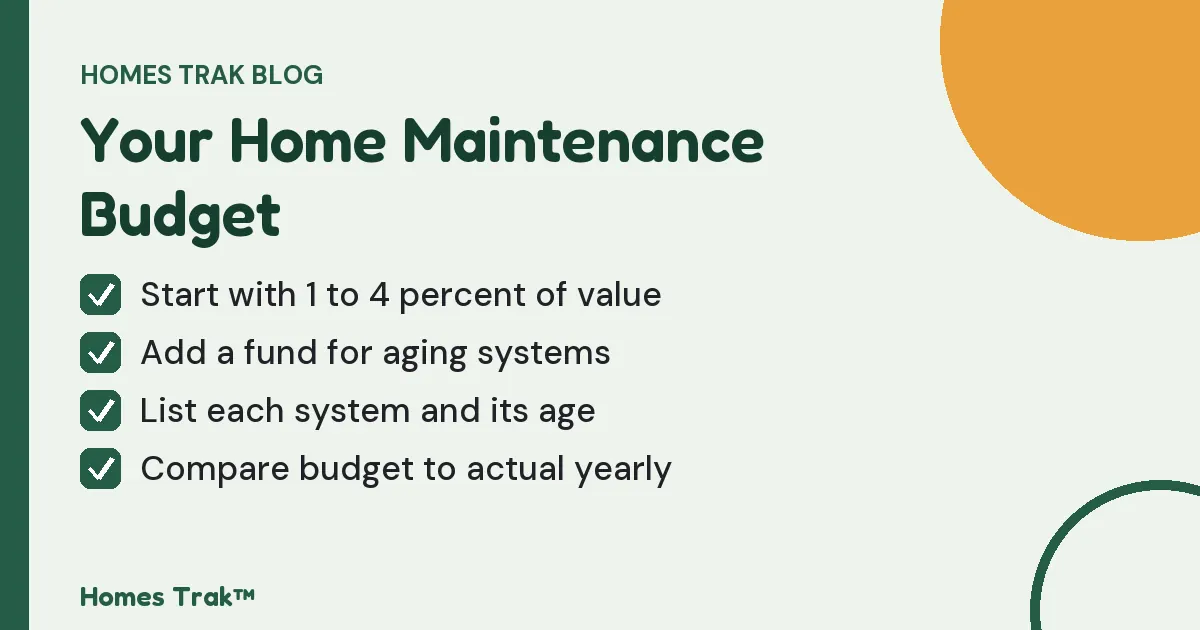
Most homeowners plan on spending 1 to 4 percent of the home's value on maintenance each year, or about one dollar per square foot. Those are rules of thumb, so the better number comes from the age of your roof, heating and cooling, water heater and other big systems.
This guide shows how to use the rules as a starting point, then build a budget that fits your own house. It is general information, not financial advice. Talk to a financial adviser if you are deciding how much to save or borrow.
Why the rules of thumb fall short
The 1 percent rule says a $400,000 house needs about $4,000 a year in upkeep. The square foot rule says a 2,000 square foot house needs about $2,000. Those two answers are far apart for the same home, and neither knows how old your furnace is.
A five year old house with a new roof may spend very little for years. A 30 year old house can face a roof, a water heater and an air conditioner in the same stretch. The yearly average hides those spikes. The spikes are what break a budget.
Age, climate and past care matter more than price. A house near the coast deals with salt air and storms. A house in a cold climate deals with frozen pipes and ice dams. A house where the gutters were cleaned and the filters changed on time usually costs less than the same house left alone.
Two parts of a good budget
Split your money into two buckets.
- Routine upkeep covers filters, gutter cleaning, dryer vent cleaning, pest control, caulk, smoke alarm batteries and small repairs. This is steady and easy to predict.
- A replacement fund covers the big items that wear out on a schedule, like the roof, the water heater, the HVAC system and major appliances.
Routine upkeep is what the rules of thumb describe. The replacement fund is where most homeowners get surprised.
Steps
- Write down every major system in the house and its install year. Look for dates on labels, receipts, permits or the home inspection report. Our guides on how to find the age of an HVAC unit and how to tell how old your water heater is show where to look.
- Look up a typical life span for each one. The InterNACHI life expectancy chart is a free reference used by home inspectors.
- Subtract the age from the life span to get the years left. A water heater with a 10 year life that is now 8 years old has about 2 years left.
- Get a rough replacement cost for each item. Ask a local contractor or use a recent quote. Costs vary a lot by region.
- Divide each cost by the years left. That is how much to set aside each year for that item.
- Add the yearly amounts together, then add your routine upkeep. That total is your budget.
- Check it once a year against what you really spent and adjust.
A simple example
Say the house has these big items.
- A roof that has about 10 years left, with a replacement estimate of $12,000. Set aside $1,200 a year.
- A water heater with 2 years left and a $1,800 estimate. Set aside $900 a year.
- An air conditioner with 5 years left and a $7,000 estimate. Set aside $1,400 a year.
That replacement fund comes to $3,500 a year before any routine upkeep. Add $1,500 for filters, gutters, small fixes and service calls, and the total is $5,000. The numbers here are made up to show the math. Your quotes will differ.
Notice how the water heater changes the picture. It is a small item, but it is close to the end, so it needs more money per year than you might expect. Without the list, it would show up as a surprise bill.
Where the money really goes
When you track spending for a year or two, patterns show up. Some months are quiet. Then a service call, a broken appliance and a gutter job land in the same season. Tracking helps you see three things.
- Which systems cost the most to keep running
- Which months tend to be expensive in your climate
- How much of your spending is upkeep and how much is improvement
That last point matters. A new deck or a kitchen update is an improvement, and it should not hide inside your maintenance number. Keeping them apart shows whether the house is getting more expensive to own or whether you chose to spend on upgrades. Improvement records also help at tax time when you sell. The IRS explains how improvements can change your home's basis in Publication 523.
Ways to keep the budget lower
Small, regular care is the cheapest care. The Energy Star maintenance checklist suggests checking your air filter every month and having heating and cooling serviced each year. A clean filter and a yearly tune up help the system run better and catch problems early.
Other low cost habits help too.
- Clean gutters so water drains away from the foundation.
- Flush the water heater on schedule. See how often to flush a water heater.
- Clean the dryer vent to lower fire risk.
- Walk the house each season and look for leaks, cracks and loose shingles.
Get more than one quote for big jobs. Three quotes give you a feel for the fair price and for what each contractor plans to do.
How Homes Trak helps
Homes Trak, an app for iPhone and iPad, shows a life countdown for the roof, HVAC, water heater, electrical panel, septic and well, with a replacement cost range for each. It sends maintenance reminders based on your home profile and climate zone. Its Projects and money tools include Budget Vs Actual, up to 3 quotes per project, and cost of ownership by year with maintenance and improvements kept apart. See the features page for the full list. Homes Trak is Coming Soon to the App Store and Google Play.
If you want a full record system for the house, read the best way to keep track of home maintenance.
Frequently asked questions
What is the 1 percent rule for home maintenance?
The 1 percent rule says to set aside about 1 percent of your home's value each year for maintenance. It is a rough starting point. Older homes, harsh climates and systems near the end of their life usually need more.
Should I budget more for an older house?
Usually yes. An older house is more likely to need a roof, water heater or HVAC replacement in the next few years. List each system with its age and expected life to see how much to set aside.
Is a new roof maintenance or an improvement?
A full replacement is often treated as an improvement for tax records, while patching a leak is a repair. Rules differ by situation, so check IRS Publication 523 or ask a tax professional about your case.
How often should I review my home maintenance budget?
Once a year works for most homeowners. Compare what you planned to what you spent, update the ages of your systems, and add any new quotes you received.
Sources
- InterNACHI, Standard estimated life expectancy chart for homes
- Energy Star, Maintenance checklist
- IRS, Publication 523, Selling your home