 Homes Trak™
How Often to Replace Washing Machine Hoses
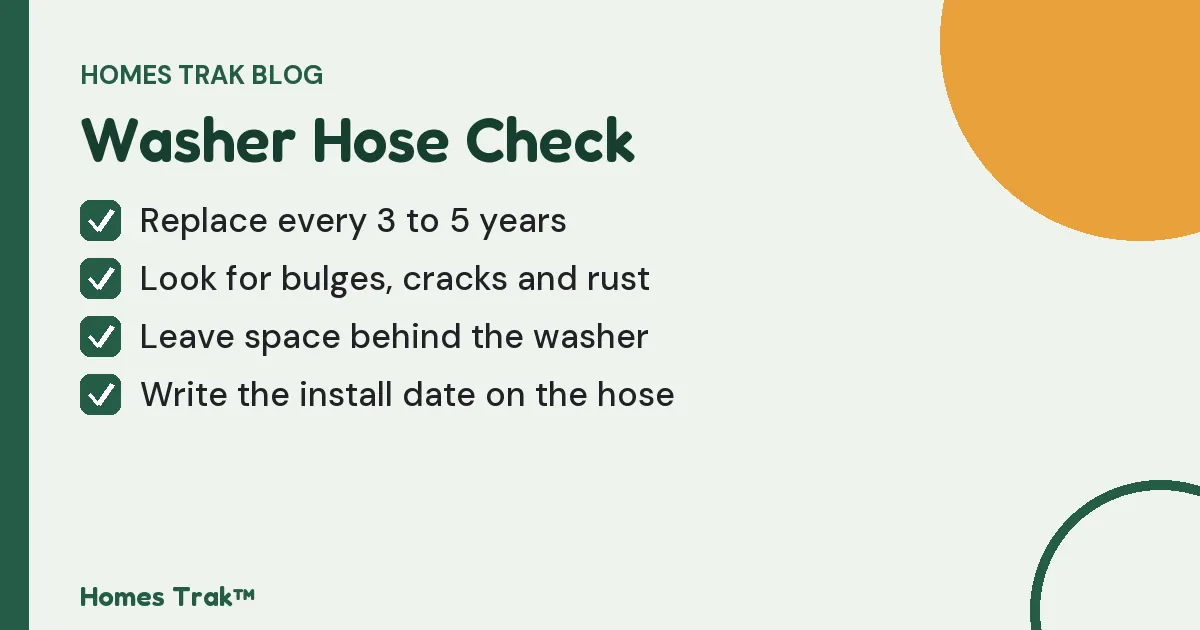
A common guideline is to replace washing machine supply hoses every 3 to 5 years, and right away if you see a bulge, crack, kink or rust at the fittings. Your washer's manual may give the maker's own interval, so check it first.
The hoses behind the washer sit under full water pressure all the time, even when the machine is off. When one bursts, it can release water until someone shuts it off. That is why a cheap hose is one of the easiest flood risks to fix in a house.
Why washer hoses fail
Most washers come with black rubber hoses. Rubber dries out and weakens with age, heat and pressure. The hose can swell near the ends, crack on the outside or split where it bends. The metal fittings can corrode and start to drip.
A few things make failure more likely.
- The washer is pushed tight against the wall, which kinks the hoses.
- The hoses are older than you can remember.
- The house has high water pressure.
- The faucets behind the washer stay open all the time.
A burst hose in a second floor laundry room can soak the ceiling below. A slow drip in a basement can go unseen for weeks.
Rubber or braided steel
You will see two main types at the hardware store.
- Rubber hoses are cheap and flexible. They work, but they age faster and give less warning.
- Braided stainless steel hoses have a rubber or plastic tube inside a metal mesh. They resist bursting better, though the inner tube still ages, so they need checks and replacing too.
Some hoses have a built in safety valve that shuts off flow if the hose bursts. There are also automatic shut off valves and leak sensors that sit on the floor. Ask at the store which ones fit your washer and plumbing.
Whatever you buy, get the right length. A hose that is too short gets stretched. One that is too long can loop and kink.
How to check your hoses
Pull the washer out a few inches so you can see both hoses from end to end. Use a flashlight. Look and feel for these signs.
- Bulges or blisters along the hose
- Cracks, especially near the ends
- Kinks or sharp bends
- Rust or white crust on the fittings
- Drips, damp spots or water stains on the floor or wall
If you see any of these, replace both hoses. Hot and cold hoses age at the same rate, so change them as a pair.
Steps
- Turn off the hot and cold faucets behind the washer. Turn them clockwise until they stop.
- Unplug the washer and pull it away from the wall.
- Put a towel and a small bucket under the connections to catch water.
- Unscrew each hose from the faucet, then from the back of the washer. Use pliers if the fittings are tight.
- Check that each new hose has a rubber washer inside each end.
- Screw the new hoses onto the washer first, then onto the faucets. Hot goes to hot and cold goes to cold. Tighten by hand, then a little more with pliers. Do not over tighten.
- Turn the faucets on slowly and check every connection for drips.
- Push the washer back, leaving about four inches of space so the hoses do not kink.
- Write the date on a piece of tape on the hose or the wall, and save it in your records.
If the faucets behind the washer are stuck or leak when you turn them, call a plumber. Forcing an old valve can break it.
Habits that lower the risk
A few small habits help a lot.
- Look at the hoses a couple of times a year, such as when you change smoke alarm batteries.
- Never run the washer while nobody is home.
- Some people turn off the washer faucets when they leave for a trip. Check your washer's manual first.
- Know where your main water shut off is. See where is my water shut off valve.
Hoses are only one source of hidden leaks. The EPA WaterSense program suggests a simple water meter test to check the whole house. Our guide on how to check for a water leak in your house walks through it.
Other hoses worth checking
While you are at it, check the other flexible water lines in the house.
- The dishwasher supply line under the kitchen sink
- The refrigerator ice maker line behind the fridge
- The supply lines under bathroom sinks and behind toilets
These lines age too. Look for the same signs of bulging, rust and drips.
How Homes Trak helps
Homes Trak, an app for iPhone and iPad, lets you add your own reminder for a hose check or replacement at any interval you choose. Log the swap in Quick Log so the date shows on your History timeline. The washer can also live in Rooms and inventory with its warranty date in Deadlines. See the features page. Homes Trak is Coming Soon to the App Store and Google Play.
For keeping the warranty and manual handy, see how to keep track of appliance warranties.
Frequently asked questions
How long do braided steel washer hoses last?
They usually resist bursting better than plain rubber, but the inner tube still ages. Follow the hose maker's guidance, check them twice a year, and replace them if you see rust, bulges or drips.
Should I turn off the water to my washing machine after each use?
Some people do it to lower the risk of a burst hose while the washer sits idle. Check your washer's manual first, and make sure the faucets turn easily so you do not wear out an old valve.
How do I know if my washing machine hose is about to burst?
Look for bulges, blisters, cracks near the ends, kinks and rust on the fittings. Any of these means the hose is weak. Replace both hoses as soon as you can.
Do washing machine hoses come with new washers?
Some washers include hoses and some do not. Even when they do, many owners choose to buy braided hoses. Check what came in the box and read the install section of the manual.